Unless you're shooting a remake of the black and white classic "Last Picture Show" or "How The West Was Won", West Texas doesn't jump out at you as a place to create intense drama, as a place to go to create ANY kind of drama, unless you enjoy wide open spaces, cows, and oil fields. Not that it isn't a fine place to live and raise families. It's just not at the top of the 'best film locations' list of the DGA (not that such a list actually exists - but if it did!)
I was in Lubbock with a television crew, covering Billy Graham's West Texas Crusade. We had flown in six studio cameras (back when each one was the size of a small refrigerator!), a full remote control room, and enough television cable to circle the state (well, not quite the state...but a lot!). Our control room was set up in a semi tractor trailer behind the grandstands of the University football stadium where the Graham meetings were being held. As we prepared for the opening night, storm clouds began to darken the sky. The forecast was for rain -- predicted for just about the time Billy Graham would be speaking. We wrapped the cameras in plastic, erected umbrellas over the viewfinders, and hoped the the forecasters got it wrong. They didn't! As thousands of Texans crowded into the stadium it began to drizzle. By the time Dr. Graham stood up to speak it was a steady rain. By the time he was half way into his message, it was a 'Texas gully-washer'. Translation: a torrential downpour. The rain was pounding so hard on the metal roof of our control room I could barely communicate with my crew on headset. My cameramen were spending more time wiping water from their lenses than lining up shots. On stage, someone held an umbrella over Dr. Graham as he persevered on to the end of his message. By now the football field between the stage and the grandstand was a small lake.
Dr. Graham ended his message and then gave the invitation that he has given in cities around the world, for those desiring to have a personal relationship with God to come forward, stand in front of the stage, and join Dr. Graham in a prayer. The choir began to sing "Just As I Am" as Dr. Graham stepped back from the podium and waited. I aimed my cameras toward the aisles. I need not have. No one moved. The choir sang another verse. Still the field was empty. Then Dr. Graham stepped forward and said "I'm GLAD that it's raining, tonight!" ('You're the only one', I thought to myself!) He continued. "...Because if you come forward tonight in this miserable rain across this wet muddy field, you'll know that you were serious about giving your life to Jesus Christ. Your decision will mean a lot more to you than if it were dry and you were comfortable. So I'm glad it's raining!"
The choir began to sing again. And still no one moved...until, I saw him...a boy...not more than twelve or thirteen...a crutch under each arm, rain pouring down on his face...walking across that wet muddy football field toward Dr. Graham. It was the most moving moment of the seven years I directed Billy Graham crusade telecasts around the world. I cried. Just about everyone in the control room cried. Half the stadium was in tears. And then, taking their cue from the courage of this young man, dozens, then scores, finally hundreds of others got out of their seats and followed his example. It was a moment I will never forget -- nor will the thousands of people who sat in that football stadium to witness the faith of a young cripple boy who inspired hundreds of others to follow him to find God on a cold stormy night in West Texas. It may never make the list of great film locations, but it was one that night, and I'm glad, eternally glad, I was there!
Friday, June 15, 2012

Monday, May 28, 2012
"NOT A DAY TO BE HAPPY!"
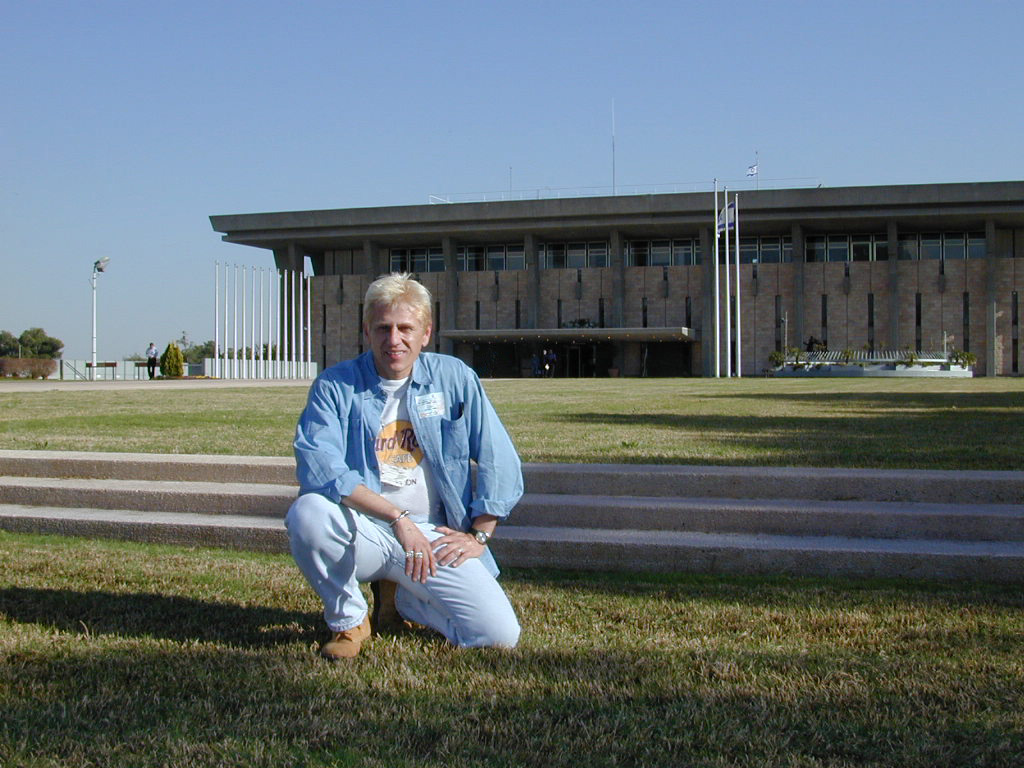
It was the day before the Israeli Memorial Day, the most important non-religious holiday in Israel. I was living in Tel Aviv, where I was spending a year writing and directing a new television series called "AGAINST ALL ODDS: In Search of a Miracle". I had just entered my apartment building and was walking up the stairs, when I saw one of my neighbors, a young man who lived on the floor below. Proud of the fact I had recently learned the Hebrew expression for 'Happy Holiday', I smiled and called out "Chag Sameach" as we approached. But instead of returning the greeting, my neighbor turned to me and almost tearfully responded, "This is NOT a day to be happy! It is a day to remember!
I had deeply offended this young man because I had yet to learn how seriously, almost reverently, Israelis honor those who have died in the service of their country's freedom. Back home, most of US would be planning a big picnic or a trip to the beach or a shopping spree for the big "Memorial Day Sale" - but not here. Thankfully, my neighbor accepted my apology and we remained friends. But I could have avoided my blunder had I taken the time to learn more about the culture of Israel before I got there. Granted I had visited many times. But I had never actually LIVED there as a resident as I was doing then.
The next morning, on the 'eve' before Memorial Day itself (an Israeli day begins at sundown), I was in a taxi on busy Dizengoff Street in Tel Aviv. Suddenly, without warning, the driver stopped the car and got out. I looked around to see that EVERY driver had stopped and was doing the same thing. On the street, waiters in the outdoor cafes stopped waiting on customers. Teenagers got off their bicycles. Pedestrians stopped walking. Everyone stopped doing what they were doing. In the distance a siren could be heard. I looked at my watch. It was 10 o'clock in the morning. After a minute, the siren ended and everyone went on their way. My driver got back in the car and silently drove on to my destination. I later learned the scene had been repeated everywhere in Israel, even on the freeways, as five lanes of cars, trucks, and buses stopped wherever they were and their occupants got out and stood in a moment of honor for the dead. It was one of the most moving experiences of my first year living in Israel.
Ever since that experience, I have made a point of trying to be more aware and sensitive to other cultures and traditions whenever I travel. I encourage you to do the same. If you are a television or film professional, you will almost for certain someday have the opportunity to experience a culture other than your own, be it a different social group in your own country or an entirely different people in an exotic distant land. When those times come, make every effort to learn the traditions and customs, to know the social mores and taboos, to find someone who can mentor you on cultural etiquette in the place you are going BEFORE you get there. Then find someone who will also mentor your manners after you arrive. The result will be an enriched experience for you and a more pleasant relationship with those you meet -- and that WILL be a day to be Happy!
Tuesday, May 1, 2012
MERE COINCIDENCE?
I was in Manila, The Philippines, shooting a television special with Dr. Billy Graham. We filmed his message before an audience of nearly 100,000 people in Rizal Park, near historic Manila Hotel that served as headquarters for Douglas MacArthur in World War II, We then traveled around the country shooting other segments for the hour special. I was stirred by the visit to Corregidor, where MacArthur famously uttered his promise "I shall return". But I was unprepared for the site that greeted us at the entrance to the sprawling American military cemetery just outside Manila. A sea of white marble crosses and Stars of David stretch as far as the eye can see and beyond, in every direction. It is a moving site that reminds the visitor of the enormity of the sacrifice that has been made to keep us free.
I filmed a sequence with Dr. Graham with the cemetery behind him as he compared the sacrifice made by these young men and women for our political freedom with the sacrifice of Christ for our spiritual freedom. When he finished, I kept the crew behind to shoot 'B' roll footage of the cemetery to be inserted later in editing the sequence for television.
It occurred to me that it would be powerful to reveal the cemetery by starting on the name of someone with a mid-western 'All American next door boy' sounding name, then pull back to reveal a sea of markers as far as the eye could see. The names are etched into the white marble of the markers so any name would only be recognizable for a couple of seconds before the bright sun would cause the name to blend into the marble, but I knew it would be powerful for those who caught those two seconds. To make sure I had choices in editing, we filmed a dozen or so different markers in the same way, each time beginning on a different name, then pulling back to dramatically reveal the thousands of markers.
We finished filming, came home, and I screened all the footage. I selected one of the several shots we had filmed at the cemetery, added music and narration, mastered the show and sent it off to broadcast.
The morning after the national telecast, I received a phone call from our Chicago office, asking if I'd heard the news? What news? Apparently the night before, an elderly gentleman was watching the program who, along with his brother, had fought in World War II. His brother had gone missing in action during the war and the War Department had lost all trace of what had happened to him. The old man had long ago stopped praying to find his brother, but still he wondered what ever happened to him. He sat down to watch Billy Graham as he had often done before. But as he listened to Dr. Graham's message, the image dissolved to a small white marble marker in a cemetery on the other side of the world, a marker that bore the name of his long lost brother. The sun quickly overpowered the etched image and it blended with the white marble of thousands of others across the vast sea of the dead. But in those brief two seconds, 35 years of wondering, praying, and longing were answered. He had found his brother.
By the next morning, the network news had learned of what happened. Radio commentator Paul Harvey reported the story to the nation. A few days later the old man was on a plane to visit his brother's grave.
I've thought about that story many times. Just coincidence? Why did I choose to film that sequence at the cemetery? Corregidor or somewhere else would have provided a dramatic backdrop as well. Arriving at the cemetery, I could have set up my camera anywhere - in hundreds of spots on those hillsides, I could have then chosen any of dozens of markers near where we set up. Returning to LA, I still had a dozen very good choices for the shot I eventually used. Why THAT one? Why was that elderly veteran watching that night? A glance away from the screen for two seconds and he would have never found his brother's grave. But I DID choose that marker and this dear man WAS watching and he DID find his brother. As Paul Harvey ended his newscast by saying 'And that's the REST of the story'.
Whatever YOU may think, I believe I was unwittingly guided in all those choices by a loving God who who had chosen to use me to be part of answering this old man's prayer to know his brother's fate and be able to say 'goodbye' after 35 years.
Never under-estimate God's ability to use you in ways you don't know, to accomplish His will on behalf of someone you may never meet or know -- but whose life you will touch because God used you. He's doing it in all of our lives, more often, I dare say, than any of us will ever know on this side of eternity. Mere coincidence? I don't think so!
Sunday, April 1, 2012
"BE A GOOD LISTENER, THOMAS"
I was a 'wet behind the ears' young director in my mid-twenties in Tokyo, Japan for pre-production meetings for an upcoming television event. Walter Bennett, my boss and the executive producer, gave me some final words of advice before going into a meeting with the Japanese officials. "Thomas, keep your mouth shut and be a good listener!" I did. We both did. By doing so we earned the respect of our hosts who, I later learned, had often been disappointed in Americans who jump to conclusions and blurt out their positions before hearing everything in a negotiation.
Once I was on location at Pikes Peak in the Colorado Rockies, directing a celebrity stand-up scene for an upcoming Christmas special. Wanting to have some 'bonding time' with my young son David, I had brought him along from our home in LA.
Everything was set. I called 'Action'. The celebrity did his part well. Great take! I was just about to end the scene when I (and everyone else) heard a five year old little boy's voice from over my shoulder confidently call out "Cut!" Everyone chuckled at the youthful interjection. Trying to appear as serious as I could, I walked over to David and quietly informed him that what he had done is 'what they pay daddy to do'. He dutifully promised not to do it again! David learned to be a listener that wintery day on Pikes Peak. (Little did either of us know that a few years later, that little boy would be calling his own cues on his own shoots as a film director in his own right!)
Knowing when to be a good listener is important to becoming a good anything -- but especially, it seems to me, as a film and television writer or director.
While I was still in college, I had the opportunity to visit NBC Studios in Burbank for several days as the guest of Carl Gibson, a veteran NBC lighting designer, who seemed to think I had potential worth encouraging. Carl got me in the control rooms of the network's biggest shows where I watched producers, directors, technicians, and performers creating music and variety specials, comedy revues, daytime dramas, "The Tonight Show". I sat within a few feet of some of the biggest names in network television production and watched and listened as they communicated (or didn't) with each other, how they dealt with problems (or made them worse), how the language of their craft flowed in short-hand conversation between them. At night I crammed a notebook with what I learned each day. I was a 'kid' no one of importance. My anonymity allowed me to roam the halls of the vast NBC Studios unnoticed. I could ask dumb questions (and I did!) and no one thought less of me for my ignorance. In fact, they went out of their way to share their knowledge with a kid thirsty to learn.
What I learned was invaluable. Much of the core technique I use today in directing multi-camera television events was formed in those NBC sessions by being a good listener and observer. That would be almost impossible to do now. Established directors seldom sit in on other directors at work. It's almost an unspoken professional courtesy not to do so. Yet how I treasure those times when I have been able to do just that. As instructive as those experiences have been on what to do, they have often been equally as valuable in observing what NOT to do.
If you are young, just getting started, or at any age in your career, and you have the opportunity to 'be a good listener' and learn from others, jump at the chance. It doesn't happen often enough. The rewards will be incalculable -- not to mention the business cards and phone numbers you may pick up along the way that may turn into future professional relationships or even friendships.
My friend Carl Gibson left NBC a long time ago to start ACADEMY LIGHTING CONSULTANTS. He's still lighting big shows in Hollywood and knowing Carl, still mentoring young 'would be' directors. This one would just like to say 'Thanks again, Carl...if you're listening!"
Once I was on location at Pikes Peak in the Colorado Rockies, directing a celebrity stand-up scene for an upcoming Christmas special. Wanting to have some 'bonding time' with my young son David, I had brought him along from our home in LA.
Everything was set. I called 'Action'. The celebrity did his part well. Great take! I was just about to end the scene when I (and everyone else) heard a five year old little boy's voice from over my shoulder confidently call out "Cut!" Everyone chuckled at the youthful interjection. Trying to appear as serious as I could, I walked over to David and quietly informed him that what he had done is 'what they pay daddy to do'. He dutifully promised not to do it again! David learned to be a listener that wintery day on Pikes Peak. (Little did either of us know that a few years later, that little boy would be calling his own cues on his own shoots as a film director in his own right!)
Knowing when to be a good listener is important to becoming a good anything -- but especially, it seems to me, as a film and television writer or director.
While I was still in college, I had the opportunity to visit NBC Studios in Burbank for several days as the guest of Carl Gibson, a veteran NBC lighting designer, who seemed to think I had potential worth encouraging. Carl got me in the control rooms of the network's biggest shows where I watched producers, directors, technicians, and performers creating music and variety specials, comedy revues, daytime dramas, "The Tonight Show". I sat within a few feet of some of the biggest names in network television production and watched and listened as they communicated (or didn't) with each other, how they dealt with problems (or made them worse), how the language of their craft flowed in short-hand conversation between them. At night I crammed a notebook with what I learned each day. I was a 'kid' no one of importance. My anonymity allowed me to roam the halls of the vast NBC Studios unnoticed. I could ask dumb questions (and I did!) and no one thought less of me for my ignorance. In fact, they went out of their way to share their knowledge with a kid thirsty to learn.
What I learned was invaluable. Much of the core technique I use today in directing multi-camera television events was formed in those NBC sessions by being a good listener and observer. That would be almost impossible to do now. Established directors seldom sit in on other directors at work. It's almost an unspoken professional courtesy not to do so. Yet how I treasure those times when I have been able to do just that. As instructive as those experiences have been on what to do, they have often been equally as valuable in observing what NOT to do.
If you are young, just getting started, or at any age in your career, and you have the opportunity to 'be a good listener' and learn from others, jump at the chance. It doesn't happen often enough. The rewards will be incalculable -- not to mention the business cards and phone numbers you may pick up along the way that may turn into future professional relationships or even friendships.
My friend Carl Gibson left NBC a long time ago to start ACADEMY LIGHTING CONSULTANTS. He's still lighting big shows in Hollywood and knowing Carl, still mentoring young 'would be' directors. This one would just like to say 'Thanks again, Carl...if you're listening!"
Thursday, March 15, 2012
"COMPELLING EXCELLENCE..."
I once worked for a producer who mistakenly believed that excellence is best motivated by belittling someone's present performance...that no matter how well they are doing their job, by criticizing and demeaning their work they will be forced to dig deeper in their creative well and deliver something better. He was wrong, of course and it made for a horrible working relationship most of the time. But since he was otherwise a pretty swell guy and enjoyable to be around, invariably I would agree to do another project, always supposing the next one would be different. It never was. When the day came that I could financially afford to always find plausible reasons to tell him why I wasn't available to work on his next project, I breathed a sigh of relief. We've not worked together since. Thankfully, there are many producers and directors out there (and I'm trying to be one) who motivate excellence a different way.
I had the privilege of writing and directing several inspirational television programs for the late Dr. Bill Bright, founder and president of Campus Crusade, a remarkable leader and my executive producer on several projects. Dr. Bright seemed to draw the best out of everyone who worked for him, yet he never demanded excellence from anyone (that I could see). Instead he seemed to compel it. A specific incident brought this home to me.
I had completed the preliminary edit of a new television program for his organization. A screening was arranged with the 'chief' (as his inner staff sometimes affectionately referred to him). As Dr. Bright watched the film, I watched him. I could see he was not pleased. When the lights came up, I braced for a harsh response to what he had seen. Instead, he quietly turned to me and began his comments by saying, "Tom, I need to apologize to you..." (Not exactly the opening salvo to a typical dressing down!) Instead of berating my performance (which in this case, he would have been justified in doing), Dr. Bright apologized that he had not "more effectively communicated his vision for the film before I had completed so much work!"
I was floored by his reaction. By the end of his comments, I desperately wanted to do my best to please this humble leader who saw my failure as HIS failure. I returned the apology and assured him we would make it right. And we did!
Bill Bright's personal modeling of servant-leader character was very Christ-like, although he would have been the first and loudest one to deny any such lofty comparison. But it was precisely his personal character, lived out in front of others, that compelled those around him to do their very best, myself included.
As a producer or director, you have lots of opportunities to be like one of the two men I've just described. The first one is easier to follow, no doubt, and the one that comes the most naturally to most of us. By putting others down you absolve yourself of any responsibility for their failure to perform. You didn't mess up. They did! And you make sure everyone else knows it.
The second path is much less comfortable. You accept the unpleasant awareness and accept the responsibility that your colleague's failure is on some level also YOUR failure - just as your success must always be recognized as THEIR success. Making movies and television programs and stage shows is the ultimate illustration of the famous John Donne line, "No man is an island. All are part of the main." In the end, it is also this path alone that builds life-long friendships, loyalties that will go to the mat for you when you are down (sooner or later we all are!) and relationships with those around you that produces a true "joy in the journey" of making films and...well, doing just about anything in life!
Thank you so much, Dr. Bright, for teaching a young director this life lesson, by living its powerful truth so well yourself.
I had the privilege of writing and directing several inspirational television programs for the late Dr. Bill Bright, founder and president of Campus Crusade, a remarkable leader and my executive producer on several projects. Dr. Bright seemed to draw the best out of everyone who worked for him, yet he never demanded excellence from anyone (that I could see). Instead he seemed to compel it. A specific incident brought this home to me.
I had completed the preliminary edit of a new television program for his organization. A screening was arranged with the 'chief' (as his inner staff sometimes affectionately referred to him). As Dr. Bright watched the film, I watched him. I could see he was not pleased. When the lights came up, I braced for a harsh response to what he had seen. Instead, he quietly turned to me and began his comments by saying, "Tom, I need to apologize to you..." (Not exactly the opening salvo to a typical dressing down!) Instead of berating my performance (which in this case, he would have been justified in doing), Dr. Bright apologized that he had not "more effectively communicated his vision for the film before I had completed so much work!"
I was floored by his reaction. By the end of his comments, I desperately wanted to do my best to please this humble leader who saw my failure as HIS failure. I returned the apology and assured him we would make it right. And we did!
Bill Bright's personal modeling of servant-leader character was very Christ-like, although he would have been the first and loudest one to deny any such lofty comparison. But it was precisely his personal character, lived out in front of others, that compelled those around him to do their very best, myself included.
As a producer or director, you have lots of opportunities to be like one of the two men I've just described. The first one is easier to follow, no doubt, and the one that comes the most naturally to most of us. By putting others down you absolve yourself of any responsibility for their failure to perform. You didn't mess up. They did! And you make sure everyone else knows it.
The second path is much less comfortable. You accept the unpleasant awareness and accept the responsibility that your colleague's failure is on some level also YOUR failure - just as your success must always be recognized as THEIR success. Making movies and television programs and stage shows is the ultimate illustration of the famous John Donne line, "No man is an island. All are part of the main." In the end, it is also this path alone that builds life-long friendships, loyalties that will go to the mat for you when you are down (sooner or later we all are!) and relationships with those around you that produces a true "joy in the journey" of making films and...well, doing just about anything in life!
Thank you so much, Dr. Bright, for teaching a young director this life lesson, by living its powerful truth so well yourself.
Thursday, December 15, 2011
"NOON BALOON"
I had just flown into Costa Rica. I was about to meet my crew – well, not
really MY crew, but the local news crew my producer had hired to avoid spending
the money to fly my American crew down from LA for the documentary I was there
to shoot. I was concerned.
A good television news crew must be able to quickly capture
enough images to provide a reporter with visual coverage for a breaking
story. The FACTS of the story are what
is essential to good news reporting. A
documentary film crew has an additional need to find those compelling images
that tell a deeper story, often one with strong emotional elements. But like a news director, a documentary filmmaker
seldom has the opportunity to set up every shot or to check playback on every
take. If he is not the cameraman himself, he must rely on his camera crew to jump into
a moment and be ‘self-directed’ in capturing emotionally-compelling images, as
well as filming sufficient angle choices to provide adequate material for later
editing the sequence. This kind of
photo-journalism is an art and few do it well.
I needed to understand what these guys could do.
I set about to explain the emotional character of the
material I was hoping to shoot, contrasting straight news photography (with
which I knew they were very familiar) and photo-journalism documentary
film-making (of which I had no idea of their experience or understanding). After
a few moments, the cameraman (who I had only met a few minutes before) leaned
over and said, “You know Tom, we didn’t just drop in on the noon balloon!” What he was trying to politely tell me was ‘Shut
up, stupid! We know what we’re doing!” I said no more. We went on location. We shot for several days. The material would have made great clips on
the evening news. It was not
photo-journalism.
In the end, I had to agree with their assessment. They had NOT just dropped in – they never got
there! We somehow made
the material work. But the resulting film
fell far short of what it COULD have been.
I DID come away with an expression I’ve been able to use many times
since then. The next time someone who
doesn’t know you is questioning YOUR skills
or ability to do something, you can gently
remind them that ‘you didn’t just drop in on the noon balloon’. They’ll either smile and believe you or be
more convinced than ever that you’re not the one for their job! Good luck!
Thursday, December 1, 2011
"LOSE TO WIN?"
We were on location in the Colorado Rockies, shooting scenes for an upcoming Christmas television special. The older celebrity I was directing was getting tired as I pressed for yet another take. Not that any were unusable. They just hadn't risen to the performance I had imagined when I wrote the script. I kept pushing for "just one more", and "just one more" is what I kept getting -- of the same performance! I was about to call for yet another take when Ted, my producer, called me to one side and quietly pointed out that I was likely not going to get a better take, but I was tiring the talent to the point I would get even worse performances on the remaining scenes to be shot later. I stubbornly pressed on anyway and Ted was respectful enough of my position as director to let me do it, though he was obviously displeased with my decision.
We shot the scene again. It was only marginally better than the other takes. But more importantly, I had flexed my rightful creative authority as director and won, or so I thought. We broke for lunch. Danny Franks, our lighting designer, had overheard my conversation with Ted. He fell in step beside me as I walked from the set.
Danny may be physically a short man, but he's super tall in the ways that count. The name Danny Franks and American theatrical drama on television are practically synonymous. His lighting design credits on "American Playhouse", "Great Performances", "Live At Lincoln Center" and a host of network specials, chronicle an award-winning career of Broadway music and drama staged on American television. I was privileged to work alongside this veteran television legend early in my career and we had become good friends.
Danny turned to me and said something that changed my life. "Tom, you've got to learn how to lose the battle so you can win the war!" I looked at him puzzled (shows you how smart I am!). Danny continued, "You won the battle with Ted back here, but you lost the war. The next time you disagree over something, he'll be much less inclined to listen to you. He'll suspect you would insist on getting your way and disregard the value of his opinion anyway, no matter what he says. If instead, you'd have made him feel that you DID value his opinion, listened to what he said, and let yourself lose what was really a very inconsequential battle, you'd have won Ted's confidence to trust you more the NEXT time...when it might really count. In fact, you'd stand a better chance that there will BE a next time!
I let Danny's words sink in. In "winning the battle" that morning I had little to show for it (side note: I ended up using an earlier take anyway!) -- but what I DID achieve was to alienate my producer and lose his trust. I had compromised my performer's energies for the remaining scenes of the day, and I had frustrated the rest of my crew who could see (much better than I) the futility of my stubbornness. Later that day, I went to Ted, my producer, and ate some well-deserved crow! He graciously accepted my apology. We went on to work together on lots of other productions.
Over the years, I've had plenty of opportunities to put Danny's advice into practice, not when it comes to compromising moral values or ethical integrity, but all those times (and directors seem to have more of them) when I was convinced my way of doing something, my creative vision, my choice, was the right one. Time and time again, I've seen how my NOT insisting on getting my way (even when I had the authority to do so because I was also producing) saved a relationship with someone, or strengthened one, or gave an opportunity for someone else to shine that encouraged their own creative journey. Those choices, on and off the stage, have made me a stronger leader and a better man. Thanks, Danny!
We shot the scene again. It was only marginally better than the other takes. But more importantly, I had flexed my rightful creative authority as director and won, or so I thought. We broke for lunch. Danny Franks, our lighting designer, had overheard my conversation with Ted. He fell in step beside me as I walked from the set.
Danny may be physically a short man, but he's super tall in the ways that count. The name Danny Franks and American theatrical drama on television are practically synonymous. His lighting design credits on "American Playhouse", "Great Performances", "Live At Lincoln Center" and a host of network specials, chronicle an award-winning career of Broadway music and drama staged on American television. I was privileged to work alongside this veteran television legend early in my career and we had become good friends.
Danny turned to me and said something that changed my life. "Tom, you've got to learn how to lose the battle so you can win the war!" I looked at him puzzled (shows you how smart I am!). Danny continued, "You won the battle with Ted back here, but you lost the war. The next time you disagree over something, he'll be much less inclined to listen to you. He'll suspect you would insist on getting your way and disregard the value of his opinion anyway, no matter what he says. If instead, you'd have made him feel that you DID value his opinion, listened to what he said, and let yourself lose what was really a very inconsequential battle, you'd have won Ted's confidence to trust you more the NEXT time...when it might really count. In fact, you'd stand a better chance that there will BE a next time!
I let Danny's words sink in. In "winning the battle" that morning I had little to show for it (side note: I ended up using an earlier take anyway!) -- but what I DID achieve was to alienate my producer and lose his trust. I had compromised my performer's energies for the remaining scenes of the day, and I had frustrated the rest of my crew who could see (much better than I) the futility of my stubbornness. Later that day, I went to Ted, my producer, and ate some well-deserved crow! He graciously accepted my apology. We went on to work together on lots of other productions.
Over the years, I've had plenty of opportunities to put Danny's advice into practice, not when it comes to compromising moral values or ethical integrity, but all those times (and directors seem to have more of them) when I was convinced my way of doing something, my creative vision, my choice, was the right one. Time and time again, I've seen how my NOT insisting on getting my way (even when I had the authority to do so because I was also producing) saved a relationship with someone, or strengthened one, or gave an opportunity for someone else to shine that encouraged their own creative journey. Those choices, on and off the stage, have made me a stronger leader and a better man. Thanks, Danny!
Subscribe to:
Posts (Atom)